
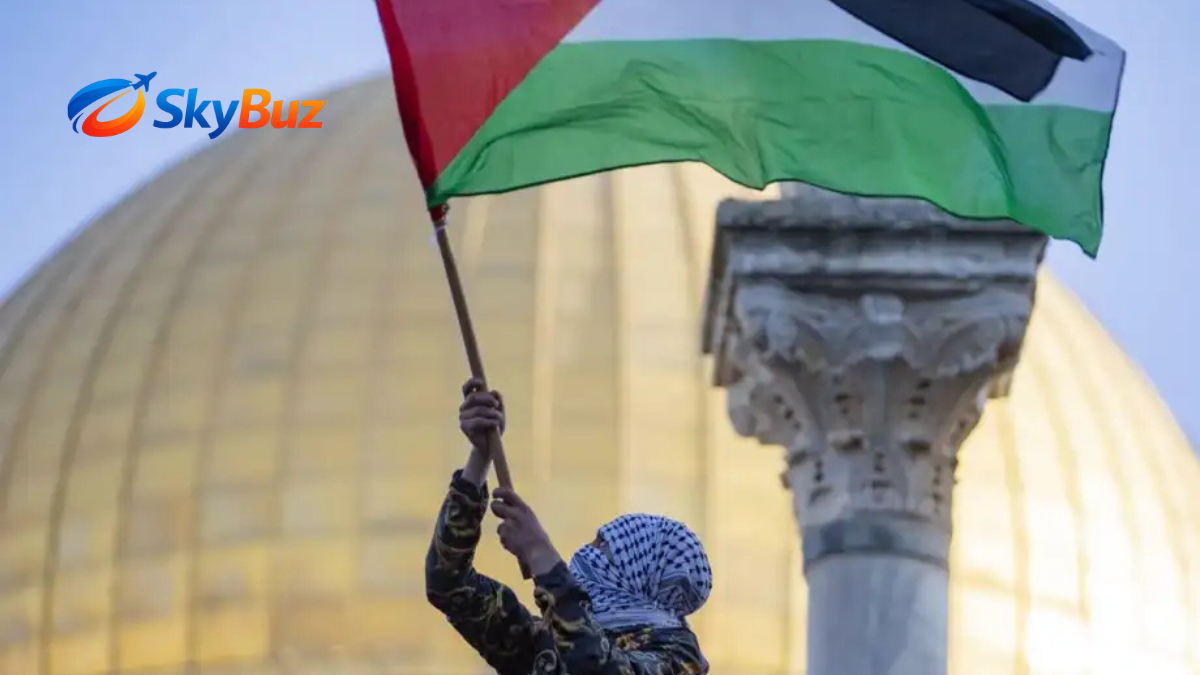
The Palestine flag is a powerful national emblem that represents identity, heritage and political aspiration. Recognised across the world for its bold combination of black, white, green and red, the flag carries layers of historical meaning that connect modern Palestine with a wider Arab legacy. Its simple yet striking design has become a universal symbol of solidarity and recognition.
In recent years, the Palestine flag has gained even greater visibility in international media, diplomatic discussions and online platforms. Whether displayed at global institutions or shared widely on social media, the flag continues to reflect the enduring spirit of a people seeking self-determination. Understanding its background helps explain why this symbol holds such deep emotional and cultural significance.
Historical Origins of the Palestine Flag
The origins of the Palestine flag can be traced back to the Arab Revolt of 1916, when Arab leaders introduced a banner featuring the now-famous Pan-Arab colours. These colours—black, white, green and red—were chosen to reflect different historical Islamic caliphates and dynasties, symbolising unity and shared heritage among Arab nations striving for independence.
In 1964, the Palestine Liberation Organization formally adopted the design as the official representation of Palestinian national identity. This step gave the Palestine flag a clear political role, aligning it with the Palestinian liberation movement and reinforcing its importance as a unifying symbol for Palestinians worldwide.
Official Adoption and Political Recognition
The Palestine flag was reaffirmed in 1988 when the State of Palestine was declared. This declaration elevated the flag from a liberation emblem to a national standard, strengthening its political legitimacy. From that moment, it became widely used in official contexts, including government offices and international forums.
A significant milestone occurred when the Palestine flag was raised at the headquarters of the United Nations in New York. This historic event marked a symbolic victory for Palestinian diplomacy, demonstrating growing international acknowledgment and granting the flag a visible presence on the global stage.
Design and Structure of the Palestine Flag
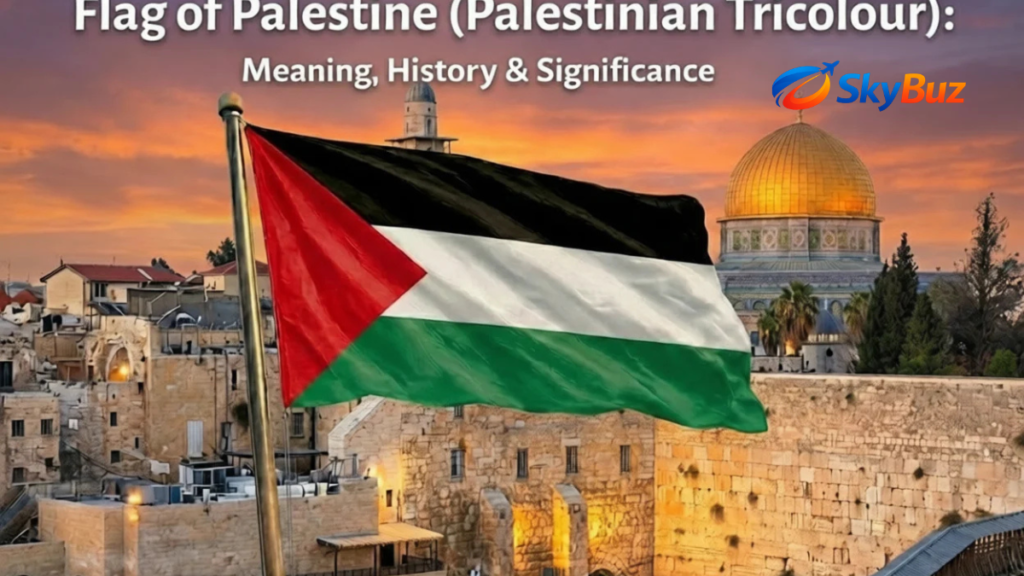
The Palestine flag consists of three equal horizontal stripes arranged from top to bottom in black, white and green. A red triangle extends from the hoist side into the centre of the flag, creating a balanced yet dynamic visual composition. The clean lines and bold colours ensure that the flag remains instantly recognisable.
Its rectangular proportions follow common international standards, allowing it to align visually with other national flags. While the design appears simple, its arrangement is deliberate and meaningful. The clarity of the Palestine flag ensures that it stands out during public demonstrations, official ceremonies and international gatherings.
Meaning Behind the Colours
Each colour on the Palestine flag carries symbolic weight rooted in Arab history. The black stripe is often linked to the Abbasid Caliphate, representing strength and resilience. The white stripe is associated with the Umayyad Caliphate and frequently interpreted as a symbol of peace and hope.
The green stripe traditionally represents the Fatimid Caliphate and is commonly connected to prosperity and the land itself. The red triangle symbolises sacrifice and is linked to the Hashemite dynasty. Together, these colours form the Pan-Arab identity, giving the Palestine flag a historical depth that goes beyond its modern political context.
Symbolism and National Identity
Beyond its historical references, the Palestine flag embodies the aspirations and lived experiences of the Palestinian people. It represents cultural continuity, resistance and the desire for recognition on the world stage. For many Palestinians, the flag is a reminder of both struggle and enduring hope.
The flag often appears at rallies, cultural festivals and sporting events, where it serves as a visible expression of unity. In diaspora communities, the Palestine flag becomes a bridge to homeland identity, strengthening emotional ties and reinforcing collective belonging despite geographical distance.
The Palestine Flag in Global Media and Digital Culture
In today’s digital age, the Palestine flag has found new life through online platforms. The 🇵🇸 emoji allows individuals to express solidarity instantly, making the flag a symbol not only of national identity but also of global awareness. Its digital presence has amplified conversations about Palestine across social networks.
Artists, designers and educators also incorporate the Palestine flag into creative projects and academic discussions. From murals and fashion to university lectures, the flag remains central to cultural dialogue. Its adaptability ensures that it continues to resonate with younger generations while maintaining historical authenticity.
Comparisons with Other Arab Flags
The Palestine flag shares its colour palette with several other Arab nations, including Jordan and Sudan. This similarity reflects the shared Pan-Arab heritage that inspired multiple national banners across the region. However, each country arranges the colours differently, giving every flag its own distinctive identity.
Understanding these differences helps avoid confusion and highlights the unique narrative of Palestine. While the shared colours symbolise unity among Arab states, the specific design and symbolism of the Palestine flag remain closely tied to Palestinian history and national aspirations.
Contemporary Relevance of the Palestine Flag
Today, the Palestine flag remains central to political dialogue and international diplomacy. It appears in news coverage, humanitarian campaigns and official statements, often symbolising ongoing debates about recognition and sovereignty. Its presence in global conversations demonstrates its enduring relevance.
As a cultural and political emblem, the Palestine flag continues to inspire both support and discussion. Its meaning evolves alongside contemporary events, yet its core symbolism—identity, unity and resilience—remains unchanged. This balance between tradition and modern relevance ensures that the flag retains its powerful significance.
Conclusion
The Palestine flag is far more than a combination of colours arranged in a simple pattern. It carries a rich history rooted in the Arab Revolt, formal adoption by the Palestine Liberation Organization and recognition in international arenas. Each stripe and triangle tells a story of heritage, struggle and aspiration.
By understanding the origins, meaning and symbolism of the Palestine flag, readers gain insight into a broader narrative of national identity and cultural pride. As it continues to fly in public spaces and digital platforms alike, the Palestine flag stands as a lasting emblem of resilience and hope in an ever-changing world.
Frequently asked questions
What do the colours of the Palestine flag represent?
They symbolise historic Arab dynasties and represent unity, sacrifice, peace and prosperity.
When was the Palestine flag officially adopted?
It was adopted by the PLO in 1964 and reaffirmed in 1988 with the declaration of the State of Palestine.
What does the red triangle on the Palestine flag mean?
The red triangle represents sacrifice and is linked to the Hashemite heritage.
Is the Palestine flag recognised internationally?
Yes, it is recognised by many countries and has been raised at the United Nations.
Why does the Palestine flag look similar to other Arab flags?
Because it uses the traditional Pan-Arab colours shared by several Arab nations.
What is the ratio of the Palestine flag?
The official flag ratio is 1:2.
What does the 🇵🇸 emoji stand for?
The 🇵🇸 emoji represents the Palestine flag and Palestinian identity.
Also Read: waffle maker