
Table of Contents
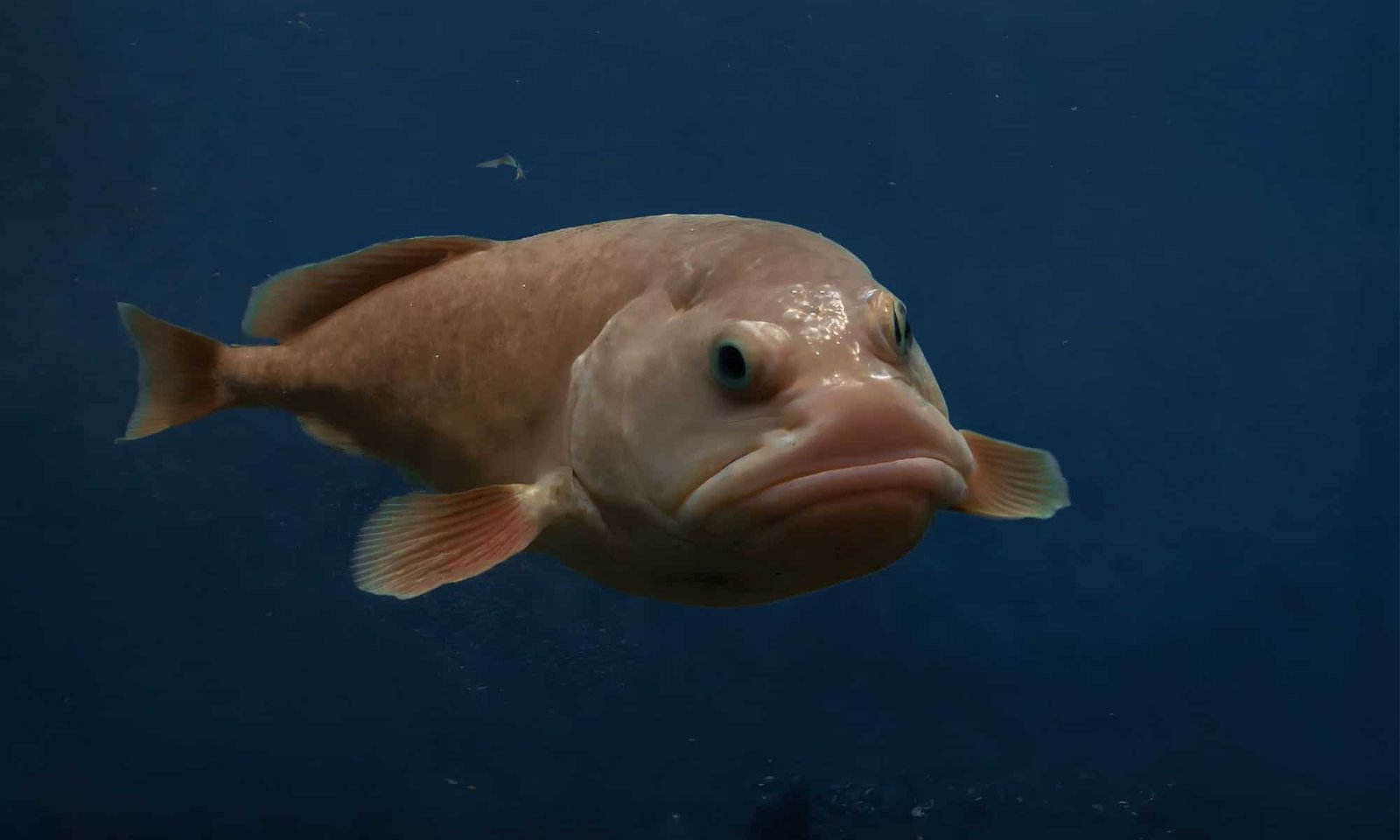
The blob fish, scientifically known as Psychrolutes marcidus, is a deep-sea fish that has gained global attention due to its unusual appearance when brought to the surface. It belongs to the family Psychrolutidae and is part of a group of marine organisms adapted to survive in extreme ocean depths. In its natural habitat, however, the blobfish does not look like the soft, sagging creature often seen in viral images.
This species lives primarily in the deep waters off the coasts of Australia, Tasmania, and New Zealand. It is a bottom-dwelling fish that inhabits environments far below the reach of sunlight, where pressure is intense and temperatures are close to freezing. In such conditions, survival depends on specialized biological adaptations rather than speed or strength.
The blobfish has become an iconic example of deep-sea life, often used in scientific discussions about how organisms adapt to extreme environments. Although it is widely recognized by the public, much of what people think they know about it is shaped by misunderstanding rather than its real underwater appearance and behavior.
Deep-Sea Habitat and Environmental Conditions of Blob fish
The natural habitat of the blobfish lies at depths between approximately 600 and 1,200 meters, in what scientists refer to as the bathyal zone. At these depths, sunlight cannot penetrate, creating a completely dark environment where visibility is almost nonexistent. The ecosystem depends on organic material drifting down from upper ocean layers.
One of the most important environmental factors in this habitat is extreme water pressure. At such depths, the pressure can be more than 100 times greater than at sea level. Most surface-dwelling organisms would be crushed instantly under these conditions, but deep-sea species like the blobfish have evolved to not only survive but function normally.
The seabed in these regions is typically muddy and uneven, with limited food resources. This scarcity shapes the entire lifestyle of the blobfish, forcing it to adopt a low-energy existence. Instead of actively swimming through the water column, it remains close to the ocean floor, conserving energy while waiting for food to come within reach.
Physical Structure and Misconceptions About Appearance
The blobfish is often misunderstood due to how it appears when removed from its natural environment. At deep-sea pressure, its body maintains a more compact and structured form. However, when brought to the surface, the sudden drop in pressure causes its gelatinous tissues to expand and collapse, creating the well-known “blobby” appearance.
Its body is primarily composed of a soft, jelly-like substance that is slightly less dense than water. This unique composition allows it to float above the seafloor without expending energy. Unlike many fish species, it does not have a swim bladder, which would be ineffective under extreme pressure conditions.
The lack of rigid bone structure is not a weakness but a key adaptation. It allows the blobfish to withstand high-pressure environments without injury. Its muscles are also relatively minimal, reflecting its low-energy lifestyle in an environment where active movement is rarely necessary for survival.
Biological Adaptations for Extreme Pressure Survival
Surviving in the deep ocean requires highly specialized adaptations, and the blobfish is a prime example of evolutionary efficiency. Its soft tissue structure is designed to match the density of seawater at depth, allowing it to remain neutrally buoyant without swimming.
One of its most important adaptations is the reduction of heavy skeletal structures. Instead of relying on bones for support, its body is supported by external water pressure. This means that any attempt to bring it to the surface disrupts its natural equilibrium, leading to structural collapse.
Its metabolic rate is also extremely low, which is essential in an environment where food is scarce. By conserving energy and minimizing movement, the blobfish can survive long periods without feeding. This adaptation is crucial for life in one of the most resource-limited ecosystems on Earth.
Feeding Behavior and Diet in Deep Ocean Ecosystems
The blob fish is an opportunistic feeder, meaning it consumes whatever edible material is available rather than actively hunting prey. Its diet typically includes small crustaceans, mollusks, sea pens, and organic debris that drifts along the ocean floor.
Because food is not consistently available in deep-sea environments, the blob fish relies heavily on chance encounters with drifting organisms. It often remains motionless, allowing ocean currents to deliver food directly to it. This passive feeding strategy reduces energy expenditure significantly.
Its slow metabolism supports this lifestyle by reducing the need for frequent feeding. This makes the blobfish well-suited to deep-sea survival, where energy conservation is more important than active hunting or territorial behavior.
Reproduction and Early Life Development of Blobfish
The reproductive habits of the blob fish are still not fully understood due to the difficulty of observing it in its natural environment. However, scientists believe that it reproduces by laying clusters of eggs on the seafloor, often in sheltered areas where currents are weaker.
These egg clusters can contain a large number of embryos, increasing the chances that some will survive in the harsh deep-sea environment. In many cases, the adult fish may remain close to the eggs to provide a form of protection, although this behavior is still under study.
Once hatched, juvenile blobfish gradually adapt to high-pressure conditions as they develop. Their growth process is slow, reflecting the overall energy-conserving strategy of the species. This slow development also makes population recovery difficult when environmental disruptions occur.
Discovery, Scientific Study, and Classification History
The blob fish was first identified during deep-sea exploration efforts off the coasts of Australia and New Zealand. Scientists studying trawled specimens noticed its unusual body structure and initially struggled to understand its true natural form due to decompression damage.
It belongs to the order Scorpaeniformes and is closely related to other deep-sea snailfish species. Over time, advances in deep-sea exploration technology have allowed researchers to better understand its biology and correct earlier misconceptions caused by surface-level observations.
Modern studies emphasize that many early images of the blobfish were misleading, showing only decompressed individuals. As a result, scientists now stress the importance of observing deep-sea species in situ to accurately understand their anatomy and behavior.
Ecological Role and Importance in Deep-Sea Food Chains
Although the blob fish is not a predator or a keystone species, it plays a subtle but important role in deep-sea ecosystems. By consuming organic debris and small organisms, it contributes to nutrient recycling on the ocean floor.
Deep-sea ecosystems are highly interconnected, and even small organisms help maintain balance within the food web. The blobfish is part of this system, supporting the flow of energy in an environment where every resource is valuable.
Its presence also serves as an indicator of deep-sea environmental health. Changes in its population can reflect broader shifts in ocean conditions, making it indirectly useful for marine ecological studies.
Threats, Conservation Challenges, and Human Impact
One of the main threats facing blob fish populations is deep-sea trawling, a fishing method that drags heavy nets across the ocean floor. This practice can unintentionally capture blob fish and damage their habitat, even though they are not targeted commercially.
Because the blob fish lives in specific deep-water zones, it is particularly vulnerable to habitat disturbance. Its slow reproductive rate further increases its sensitivity to environmental change, making population recovery a slow process.
Although it is not currently classified as critically endangered, scientists express concern about the long-term effects of deep-sea fishing practices. Protecting deep-sea habitats is essential for maintaining biodiversity, including species like the blob fish.
Cultural Perception, Internet Fame, and Scientific Reality
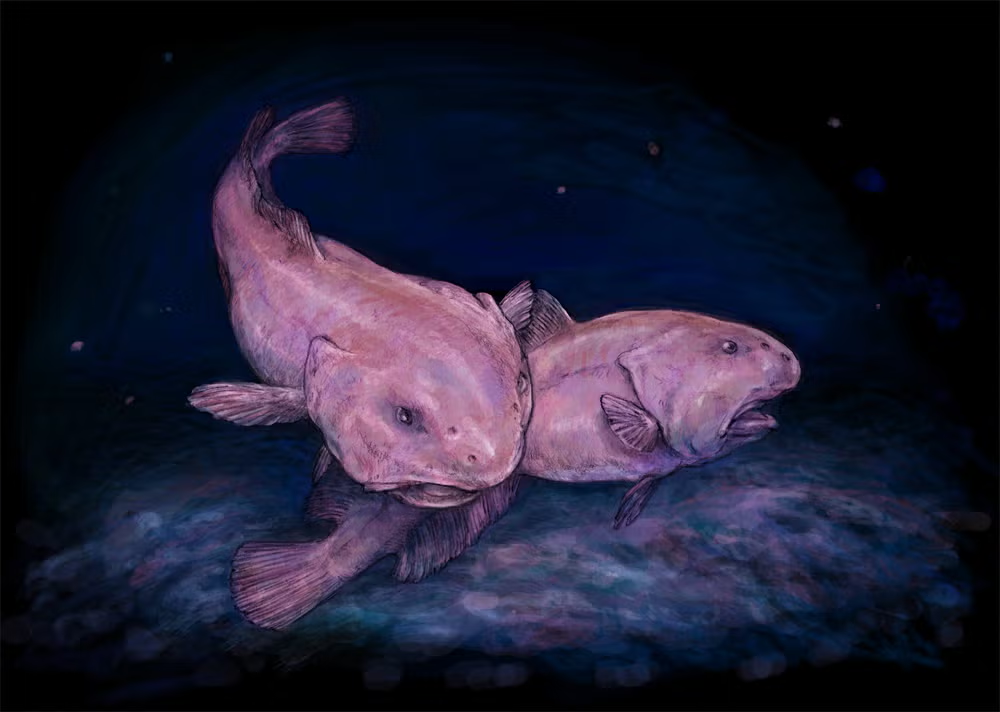
The blob fish became widely known in popular culture after being labeled as one of the “world’s ugliest animals.” This label was based on surface-decompressed specimens, not its true deep-sea appearance, which led to widespread misunderstanding.
Despite this, the blob fish has become an internet icon and a symbol of misunderstood wildlife. It frequently appears in memes, educational content, and environmental campaigns aimed at raising awareness of deep-sea ecosystems.
In reality, scientists emphasize that the blob fish is a highly specialized and successful deep-sea survivor. Its unusual reputation highlights the gap between scientific reality and public perception, especially when it comes to deep-ocean species that are rarely seen alive.
Conclusion: Why the Blobfish Deserves Scientific Appreciation
The blob fish is far more than its popular image suggests. As a deep-sea organism adapted to extreme pressure, it represents one of nature’s most efficient survival strategies. Its soft body, low-energy lifestyle, and unique biological structure are all evolutionary responses to a challenging environment.
Understanding the blobfish helps correct widespread misconceptions and highlights the complexity of deep-sea ecosystems. Rather than being viewed as strange or unattractive, it should be appreciated as an example of adaptation and resilience in one of Earth’s most extreme habitats.
Protecting species like the blob fish also means protecting the fragile deep-sea environments they inhabit. These ecosystems remain largely unexplored, and every species within them contributes to the balance of marine life on a global scale.