
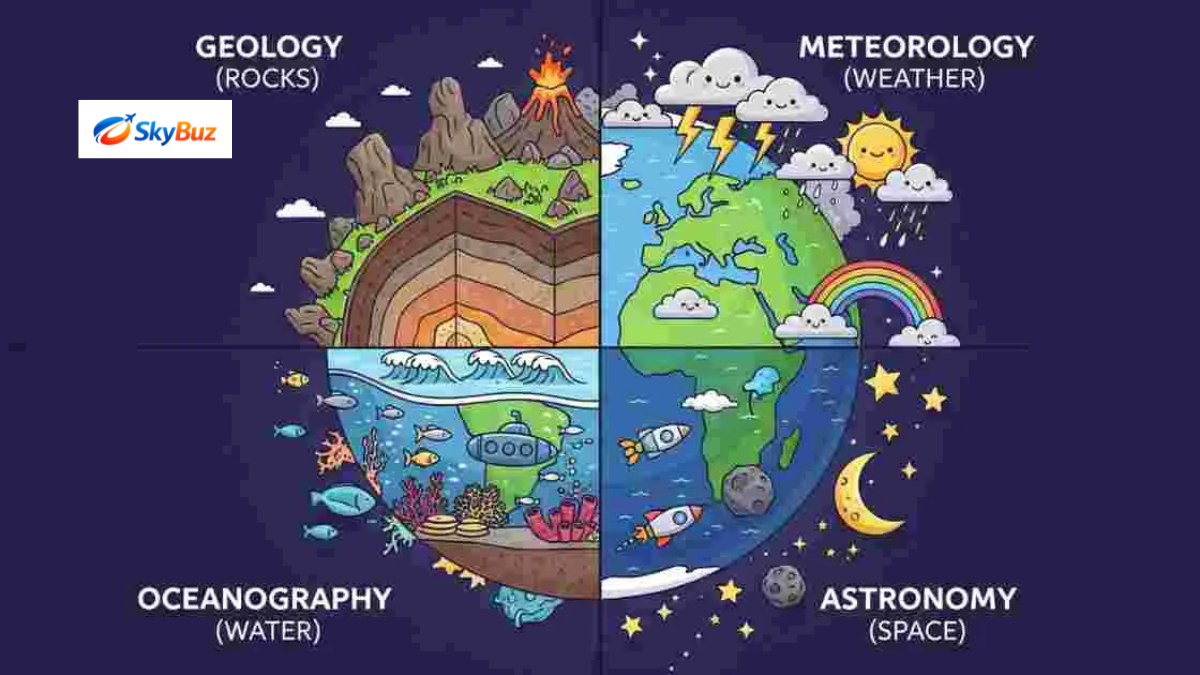
Earth science topics explore the many natural systems that shape and influence our planet. These subjects help students, researchers, and educators understand how the Earth functions through its landforms, atmosphere, oceans, and space environment. By studying these areas, scientists gain insights into natural phenomena such as earthquakes, volcanic eruptions, climate patterns, and ocean circulation that affect life on Earth every day.
For students preparing academic work, earth science topics provide a wide range of research ideas and project opportunities. These subjects encourage curiosity, critical thinking, and scientific observation. Whether someone is preparing a school presentation or a university research paper, exploring earth science topics allows learners to better understand the environment and the complex processes that maintain balance on our planet.
Understanding Earth Science Topics
Earth science topics refer to the different scientific subjects that study the physical structure and processes of the Earth. These topics explore how the planet formed, how it continues to change, and how natural forces influence land, water, and air systems. Through research and observation, scientists learn how Earth’s systems interact with one another to maintain the planet’s natural balance.
Studying earth science topics also helps people understand environmental issues that affect modern society. Topics such as climate change, natural resource management, and natural disasters are part of this scientific field. When students explore these subjects, they develop a deeper appreciation for nature and gain knowledge that can help solve environmental challenges in the future.
Major Branches of Earth Science
Earth science is organised into several major branches that focus on different parts of the planet. These branches include geology, meteorology, oceanography, and astronomy. Each field examines a specific element of the Earth’s systems while also contributing to a broader understanding of how the planet operates as an interconnected system.
When students explore earth science topics, they often begin by learning about these branches. Each area provides unique insights into the planet’s structure and behaviour. Together, these disciplines help scientists study everything from the formation of mountains to the movement of storms and the influence of the Sun on Earth’s climate.
Geology and the Study of Earth’s Structure

Geology focuses on the solid parts of the earth science topics, including rocks, minerals, mountains, and the layers beneath the planet’s surface. Geologists study how the Earth formed billions of years ago and how natural forces such as plate tectonics continue to shape the landscape today. This field also investigates earthquakes, volcanoes, and other geological events that influence the planet’s structure.
Many earth science topics within geology involve the rock cycle, fossil records, and continental drift. These topics allow scientists to explore the history of Earth and understand how landscapes evolve over time. For students, geology offers exciting research opportunities that reveal how natural forces shape the environment and influence ecosystems across the globe.
Meteorology and Atmospheric Science
Meteorology is the branch of earth science that studies the atmosphere and weather systems. This field examines how temperature, air pressure, humidity, and wind patterns interact to create weather conditions. Meteorologists use advanced technology and observation tools to predict storms, rainfall, and other atmospheric changes that affect daily life.
Within earth science topics, meteorology also includes the study of climate patterns and long-term environmental changes. Topics such as global warming, greenhouse gases, and extreme weather events are widely researched. Understanding meteorology helps scientists predict weather hazards and improve preparedness for natural disasters that impact communities around the world.
Oceanography and Marine Systems
Oceanography focuses on the Earth’s oceans and the complex systems within them. Scientists in this field study ocean currents, tides, waves, and the chemical composition of seawater. They also investigate marine ecosystems and the diverse life forms that exist beneath the ocean’s surface, from microscopic organisms to large marine animals.
Many earth science topics related to oceanography explore how oceans influence global climate and weather patterns. The oceans absorb heat from the Sun and distribute it across the planet through currents. Understanding these processes helps scientists address environmental concerns such as ocean pollution, rising sea levels, and the protection of marine biodiversity.
Astronomy and Earth’s Place in Space
Astronomy examines the relationship between the Earth and the wider universe. This branch studies celestial bodies such as the Sun, Moon, planets, and stars to understand how cosmic forces influence conditions on Earth. Astronomers analyse the movement of these objects to explain phenomena such as seasons, tides, and eclipses.
Among important earth science topics, astronomy highlights the connection between Earth and space environments. Solar radiation, space weather, and gravitational forces all affect the planet’s atmosphere and magnetic field. By studying astronomy, students gain a broader perspective of how Earth exists within the vast structure of the universe.
Easy Earth Science Topics for School Projects
Students often look for simple yet engaging subjects when preparing school assignments or presentations. Easy earth science topics allow learners to explore natural processes through experiments, models, and observation activities. These topics can include the study of soil composition, the rock cycle, water filtration, or weather patterns in a local area.
Working on these projects encourages creativity and hands-on learning. Students might build models of volcanoes, demonstrate erosion processes, or track daily temperature changes. These activities make earth science topics more practical and enjoyable, helping young learners understand scientific concepts through real-world examples.
Advanced Earth Science Topics for Research
For college and university students, advanced earth science topics offer deeper research opportunities and scientific exploration. These topics often involve analysing environmental data, studying geological formations, or investigating global climate systems. Researchers in this field use modern technology such as satellite monitoring and computer modelling to study Earth’s changing environment.
Advanced research may also include subjects such as renewable energy resources, glacier melting patterns, or ocean circulation systems. These earth science topics are particularly important in addressing global environmental challenges. Through academic research, students can contribute valuable knowledge that supports sustainability and environmental protection efforts.
Choosing the Right Earth Science Topics
Selecting the most suitable research subject is an important part of academic success. Students should choose earth science topics that match their interests while also meeting the requirements of their assignment or research project. A well-chosen topic can make research more engaging and encourage deeper exploration of scientific ideas.
Another useful approach is to select subjects that relate to current environmental issues or scientific discoveries. Topics connected to climate change, renewable energy, or natural disasters are highly relevant today. By choosing meaningful earth science topics, students can produce informative research while also learning about important challenges facing the planet.
Conclusion
Earth science plays a vital role in helping people understand the natural systems that shape the planet. From geological formations and atmospheric conditions to ocean dynamics and cosmic influences, these scientific studies reveal how interconnected Earth’s systems truly are. Learning about these processes allows scientists and students to better predict natural events and manage environmental resources responsibly.
Exploring earth science topics also encourages curiosity and scientific discovery among learners of all ages. Students who research these subjects gain valuable knowledge about the planet and develop skills that support environmental awareness. As global challenges continue to grow, studying earth science topics will remain essential for understanding the Earth and protecting its future.
Frequently asked questions
What are earth science topics
Earth science topics are subjects that focus on studying the Earth’s structure, atmosphere, oceans, and its relationship with space.
What are the main branches of earth science
The main branches include geology, meteorology, oceanography, and astronomy, each studying a different part of Earth’s systems.
Why are earth science topics important for students
They help students understand natural processes, environmental changes, and scientific methods used to study the planet.
What are some easy earth science topics for projects
Examples include the rock cycle, soil formation, volcano models, weather observation, and erosion experiments.
Can earth science topics help solve environmental problems
Yes, research in earth science helps scientists understand climate change, natural disasters, and sustainable resource management.
Also Read: mhari aurora