
Table of Contents
Lionel Messi and the Beginning of His World Cup Journey
Lionel Messi’s relationship with the FIFA World Cup began in 2006 when he was still a teenager breaking into the global football scene. At that time, he had already shown extraordinary promise with Barcelona, but the World Cup stage introduced him to a completely different level of pressure, expectation, and global attention. Argentina, a nation deeply passionate about football, immediately saw him as the natural successor to Diego Maradona, which added emotional weight to his early international career.
In the 2006 FIFA World Cup in Germany, Messi world cup was used mainly as a young impact player, but he still managed to leave his mark. He scored a goal against Serbia and Montenegro and provided an assist, showing his technical brilliance even at a young age. Argentina reached the quarter-finals but lost to Germany on penalties, ending a promising campaign. Despite limited minutes, Messi’s talent was undeniable, and the world began to watch his World Cup journey closely.
The 2010 FIFA World Cup and Tactical Frustration
The 2010 FIFA World Cup in South Africa was expected to be Messi’s breakout tournament as Argentina’s main star. Under the management of Diego Maradona, he played in a more central creative role, often responsible for unlocking defensive lines. However, despite his dominance in club football, Messi struggled to convert his influence into goals during the tournament.
Argentina performed strongly in the group stage but once again faced Germany in the quarter-finals, where they suffered a heavy 4-0 defeat. Messi did not score in the tournament, which led to criticism from fans and media who questioned his ability to replicate Barcelona-level success on the international stage. However, those who watched closely understood that Messi was often the most creative force on the pitch, even when the final product did not reflect his influence.
The 2014 World Cup and Messi’s Rise as Argentina’s Leader
The 2014 FIFA World Cup in Brazil marked a turning point in Lionel Messi World Cup legacy. This time, he was not just a star player but the undisputed leader of the Argentina national team. His performances during the group stage were exceptional, as he scored crucial goals against Bosnia and Herzegovina, Iran, and Nigeria, carrying Argentina forward during difficult moments.
As the tournament progressed, Messi’s leadership became more visible. He guided Argentina through knockout matches against Switzerland, Belgium, and the Netherlands, often being the decisive factor in tight games. Argentina reached the final against Germany at the Maracanã Stadium, one of football’s most iconic venues. Despite a strong performance, Argentina lost 1-0 in extra time.
Messi received the Golden Ball award for the best player of the tournament, a decision that sparked debate among fans and analysts. Although he was recognized individually, Messi himself appeared emotionally affected by the defeat, as it was one of his closest opportunities to win the World Cup.
The 2018 World Cup and Uncertainty in Messi’s International Career
The 2018 FIFA World Cup in Russia represented a difficult and unstable phase in Messi’s international journey. Argentina entered the tournament with high expectations but struggled to find balance and consistency throughout the group stage. Messi scored a crucial goal against Nigeria, helping Argentina narrowly advance to the round of 16.
However, the team faced France in a dramatic knockout match that ended 4-3 in favor of France. The match showcased attacking brilliance from both sides, but Argentina’s defensive weaknesses ultimately cost them progression. Following the elimination, Messi briefly retired from international football, reflecting the emotional pressure he faced after years of near success and criticism.
Although he later returned to the national team, this period highlighted the intense scrutiny placed on his messi world cup legacy and the emotional burden of carrying national expectations for so long.
The Transformation of Argentina Before the 2022 World Cup
The period leading up to the 2022 FIFA World Cup in Qatar marked a significant transformation in Argentina’s football structure. Under coach Lionel Scaloni, the team developed a more balanced and cohesive identity. Unlike previous tournaments where messi world cup carried most of the creative responsibility, Argentina became a more unified team with strong defensive organization and improved attacking support.
Winning the Copa América in 2021 against Brazil at the Maracanã Stadium was a turning point in Messi’s international career. It was his first major trophy with Argentina’s senior team, and it helped reduce psychological pressure heading into the World Cup. During this phase, Messi evolved into a more complete leader, guiding younger players and maintaining a consistent influence both on and off the pitch.
The 2022 FIFA World Cup in Qatar and the Defining Triumph
The 2022 FIFA World Cup became the ultimate chapter in Lionel Messi’s football story. Argentina’s journey began with a shocking defeat against Saudi Arabia, which created immediate doubt about their chances of progressing. However, Messi responded with leadership and determination, scoring key goals in the group stage and inspiring confidence within the squad.
As Argentina advanced into the knockout rounds, Messi delivered some of the most memorable performances of his career. Against Australia in the round of 16, he scored and controlled the rhythm of the match. In the quarter-finals against the Netherlands, he provided goals and assists in one of the most intense matches of the tournament. In the semi-final against Croatia, Messi produced a legendary performance, scoring and assisting to secure Argentina’s place in the final.
The final against France is widely regarded as one of the greatest matches in FIFA World Cup history. Messi scored twice during regular and extra time, while Kylian Mbappé delivered a hat-trick for France. The match ended in a penalty shootout, where Messi successfully converted his penalty and Argentina ultimately won the World Cup. This victory completed his football journey and fulfilled the dream he had carried since childhood.
Messi World Cup Records, Statistics, and Historical Achievements
Over five World Cup tournaments from 2006 to 2022, Lionel Messi built an extraordinary record that reflects consistency, longevity, and elite performance at the highest level. He became one of the most capped players in messi world cup history and the first player ever to score in every knockout stage of a single edition during the 2022 tournament.
messi world cup also achieved the rare distinction of winning the FIFA World Cup Golden Ball twice, first in 2014 and again in 2022, making him the only player in history to receive the award in multiple tournaments. His goal contributions, including both goals and assists, place him among the most influential players ever to participate in the competition. These achievements reinforce his standing as one of football’s greatest icons.
Messi’s Playing Style and His Impact on World Cup Football
Messi World Cup performances highlight a unique playing style that blends creativity, intelligence, and technical precision. Unlike traditional strikers who focus solely on finishing, Messi world cup operates as both a playmaker and goal scorer. messi world cup ability to read the game, create space, and execute precise passes makes him central to Argentina’s attacking structure.
Across multiple World Cups, Messi demonstrated adaptability by changing his role depending on the team’s needs. In 2014, he often carried the attack alone, while in 2022 he functioned more as a leader supported by a stronger squad. His calmness under pressure and ability to deliver in crucial moments define his World Cup legacy.
The Emotional Legacy of Messi’s World Cup Victory
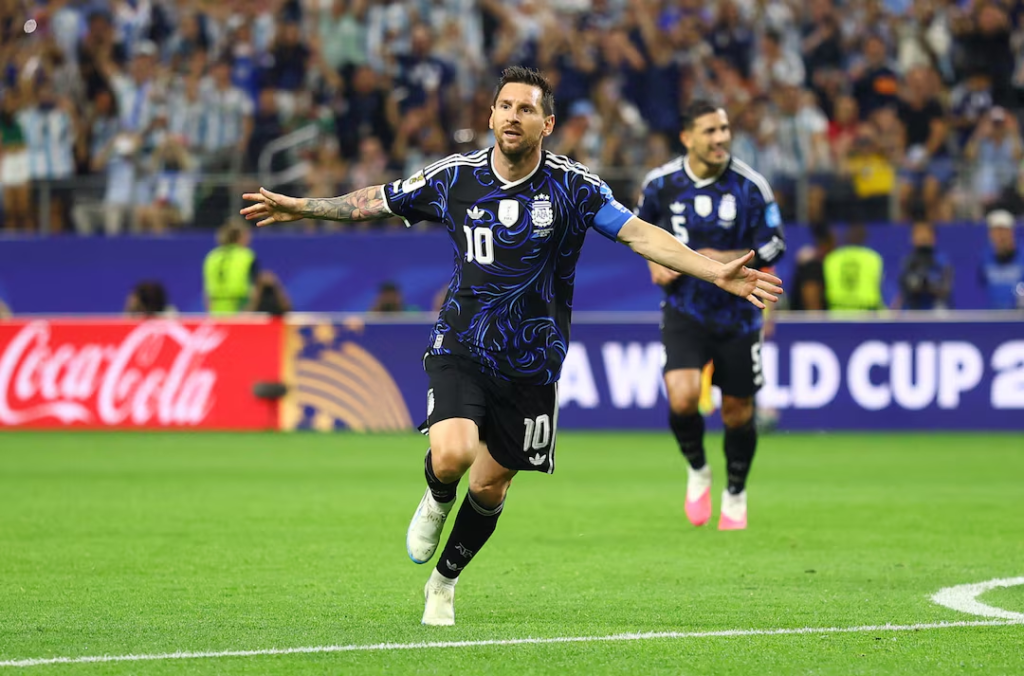
The emotional impact of Messi’s 2022 World Cup victory extends far beyond football statistics. For Argentina, it represented national pride and historical achievement. For Messi, it symbolized the completion of a journey filled with criticism, near misses, and relentless expectation.
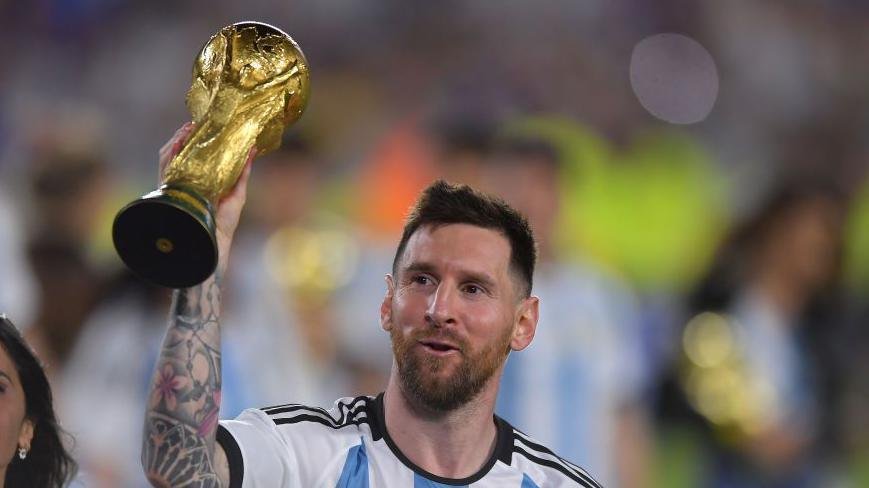
The image of Messi lifting the World Cup trophy in Qatar became one of the most iconic moments in sports history. It not only settled debates about his legacy but also established a narrative of perseverance and resilience. Fans around the world celebrated the moment as the final confirmation of his greatness on the international stage.
Conclusion: The Complete Messi World Cup Legacy
Lionel Messi World Cup journey is one of the most powerful stories in modern sports history. From his teenage debut in 2006 to his crowning moment in 2022, his path was shaped by growth, pressure, disappointment, and ultimate triumph. Each tournament added a new layer to his legacy, transforming him from a prodigious talent into a global football legend.
His 2022 victory in Qatar did not just complete his career; it elevated his status into football immortality. The Messi World Cup story stands as a testament to persistence, evolution, and greatness achieved through years of dedication. It is a legacy that will continue to inspire future generations and remain one of the defining narratives in the history of the FIFA messi World Cup.